Kelaat M’Gouna connects the name of Morocco’s Valley of Roses with a living town and the agricultural country around it. Flowers are part of the attraction, but they are only the beginning. Rosewater, local businesses, village landscapes and conversations with producers can give the journey meaning beyond a seasonal photograph.
Where is Kelaat M’Gouna?
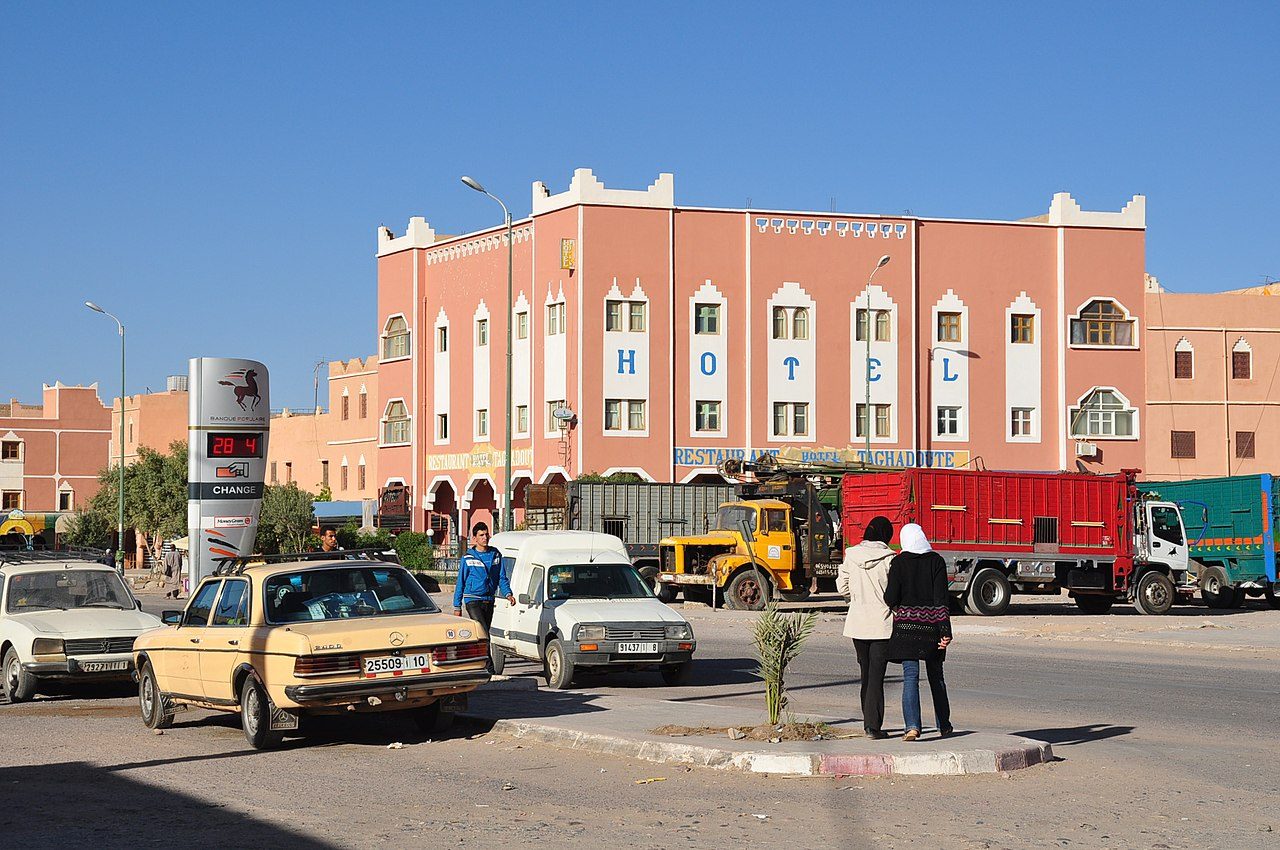
The town lies on the eastbound regional route beyond Skoura, towards Dadès country. You may see its name written as Kelaa Mgouna, Kalaat M’Gouna or Kelaat M’Gouna. Use the destination guide to place it in your itinerary, then decide whether your priority is the town, a producer appointment or an outing into the surrounding valley.
When to see the roses
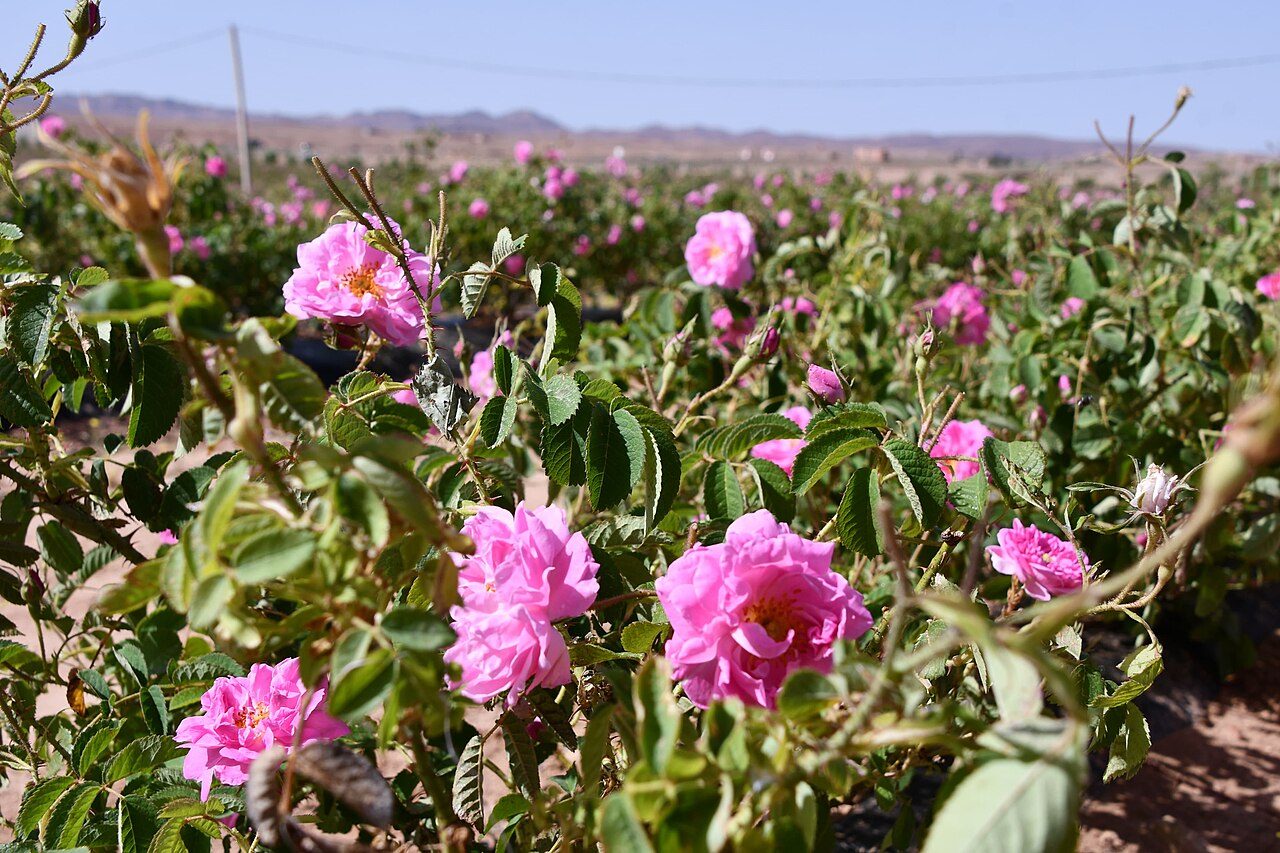
The Moroccan National Tourist Office associates the local Damask rose harvest with spring and the Moussem of Roses. Flowering is seasonal: a photograph of pink fields should never be treated as a year-round promise. If seeing flowers is essential, ask a local contact about the crop and conditions close to your travel date. Festival dates require a current organiser announcement.
Outside the flowering period, build the day around what is actually available. A producer conversation, a confirmed meal and a suitable village walk can remain rewarding without flowers in every frame. The cover photograph shows real rose fields in Kelaat M’Gouna; it illustrates the destination rather than the conditions on your chosen day.
Meet producers and ask better questions
Rosewater and other rose-based products offer a practical introduction to the local economy. Ask where the ingredients come from, what the product contains and who made it. A clear label and an explanation of production are more useful than a sweeping claim that every item sold in the town has the same origin or quality.
Before buying, compare the exact product, bottle size and price. Distinguish rosewater from rose oil and blended cosmetics. Ask about intended use and storage, especially if buying gifts. For a workshop or demonstration, arrange an appointment and confirm whether there is a charge rather than assuming production spaces are open all day.
Explore the valley with time to stop
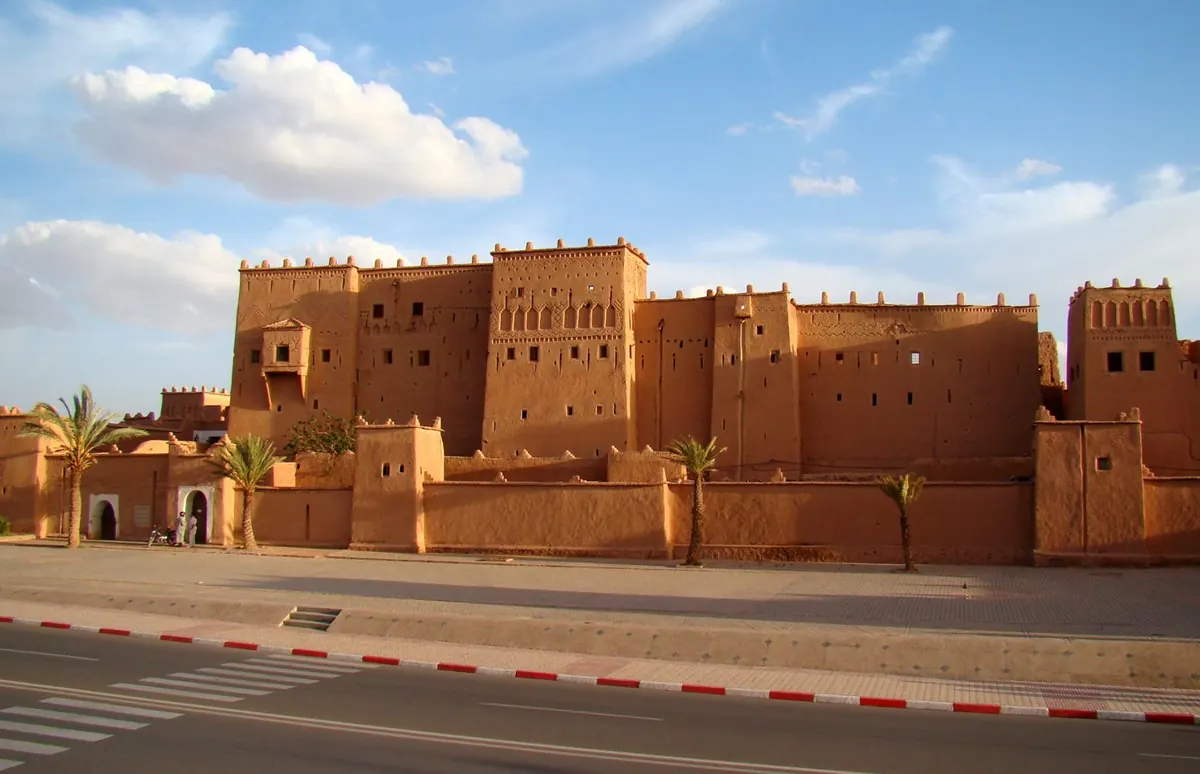
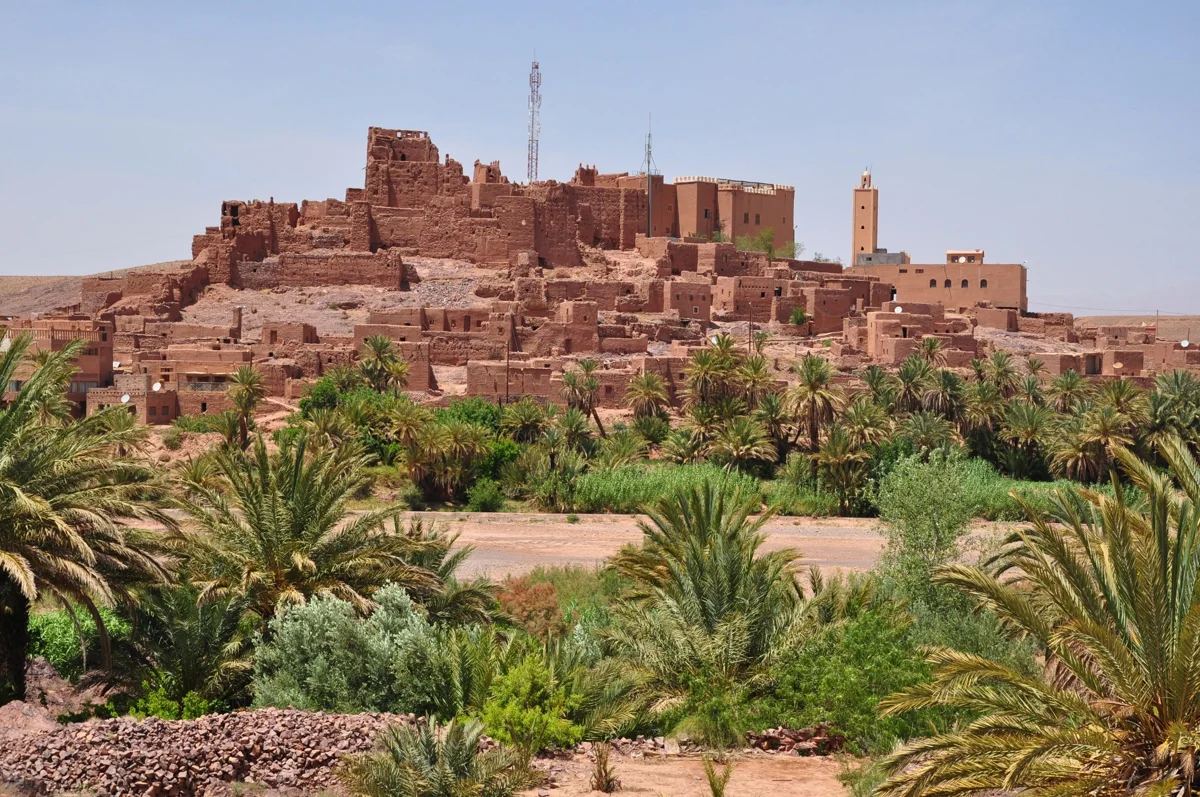
A guided valley outing can add context to the town visit. Choose a route that suits your walking ability and the conditions, with permission for any stop on cultivated land. Ask your guide to explain the connection between agriculture, settlement and water. Leave enough time to listen instead of using the valley solely as a corridor to another destination.
Planning from Ouarzazate
Choose a main theme before booking transport. A focused Kelaat M’Gouna day might include a producer visit, lunch and a short valley walk. Adding Skoura, Dadès and Todra changes the driving substantially and can leave little time for any one place. If all are priorities, consider spreading them over a longer regional journey.
- Confirm the producer appointment and whether a demonstration is available.
- Check flowering locally if travelling specifically for roses.
- Verify festival details with a current organiser announcement.
- Agree transport, guiding, lunch and return arrangements.
- Ask before entering fields or photographing residents.
Can I visit the Valley of Roses outside spring?
Yes, but plan around town life, confirmed producer visits and the landscape. Do not expect flowering fields throughout the year.
Is every rose product sold locally made in the valley?
Do not assume a product’s origin from the shop location. Ask about the producer, ingredients and labelling of the exact item.
Compare this outing with our Skoura day-trip guide before building your route. Research: Moroccan National Tourist Office’s Valley of Roses introduction. No future festival date or guaranteed harvest experience is asserted.
Photography: Rose fields in Kelaat M’Gouna — مصطفى ملو, CC BY-SA 4.0. Source: https://commons.wikimedia.org/wiki/File:Rose_fields_in_Kelaa_Mgouna.jpg
Updated: