
OUARZAZATE · CITY BIOGRAPHYOuarzazate.
ⵡⴰⵔⵣⴰⵣⴰⵜ
Ouarzazate.
A place. A people. A story.
ⵡⴰⵔⵣⴰⵣⴰⵜOuarzazate is more than a starting point for a desert journey. Its story connects earthen neighbourhoods, Amazigh culture, oasis farming, cinema and a changing modern economy. This guide distinguishes the city from its wider province and neighbouring destinations, and introduces the people and everyday life behind the scenery. It is a living introduction, not a claim that one page can represent every family or tradition.
A city across time
Aït Ben Haddou on trading routes
A regional trading post connected southern routes and Marrakech; the settlement’s history is older than the modern city.
Atlas Studios established
A production base adds studios, sets and specialist facilities to Ouarzazate’s cinema landscape.
UNESCO inscription
The Ksar of Aït Ben Haddou enters the World Heritage List for its earthen architecture and traditional settlement.
Taourirt conservation planning
Getty and CERKAS develop documentation, conservation planning and local conservation capacity.
Noor I commissioned
The 160 MW concentrating solar power project marks a contemporary energy milestone for the area.
History: older roots, a modern city
Read the city as several layers of history, rather than a single founding date.
Before the modern streets
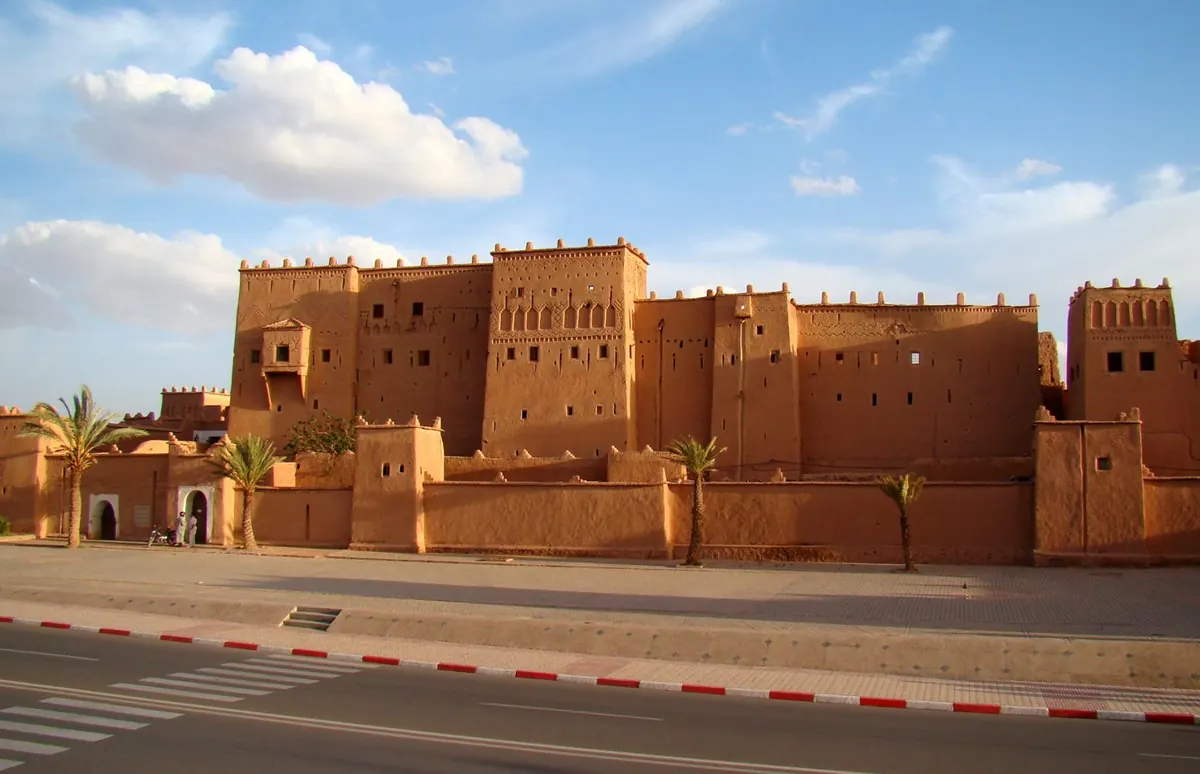
Taourirt and the surrounding settled landscapes are older than the modern city. Their houses, paths and cultivated areas help explain why this became an important meeting place. Nearby Aït Ben Haddou was a trading post linking southern caravan routes with Marrakech. That wider regional history should not be confused with the date when modern urban administration and roads developed in Ouarzazate.
Heritage that needs care
The historic quarter is not simply a backdrop. Buildings carry memories of domestic life, craftsmanship and political authority, while their conservation depends on practical repair and continued community involvement. Getty and CERKAS worked on a Taourirt conservation and rehabilitation plan between 2011 and 2016. Look beyond monumental façades: a modest doorway, a repaired wall or a resident’s account can reveal another part of the city’s story.
Sources & further reading
Geography: city, province and region
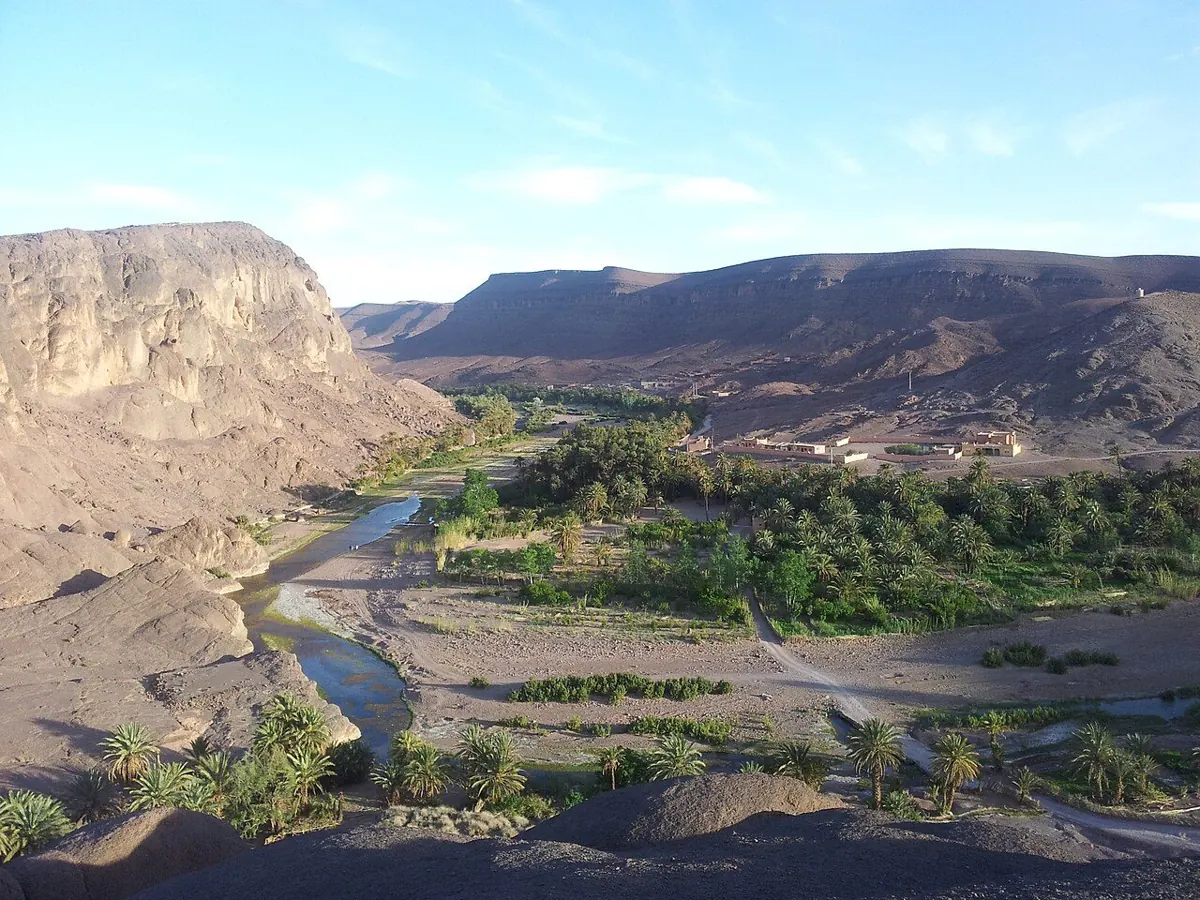
Ouarzazate opens onto mountain passes, rocky country and cultivated valleys.
Understand the map
Ouarzazate is a city and the name of a province within Drâa-Tafilalet. The region’s administrative capital is Errachidia, not Ouarzazate. Skoura and Aït Ben Haddou are nearby destinations outside the city centre; Zagora and Tinghir belong to their own provinces. A route advertised as “Ouarzazate and its region” may therefore cross several administrative areas. Always read the actual stops and driving distances.
Oases are working landscapes
Fint, the Skoura palm grove and the Drâa valley illustrate how greenery and settlement depend on water in a dry landscape. Their gardens and channels are part of everyday work, not open-access attractions. A local walk is most meaningful when it explains cultivation, seasonal change and shared resources. Stay on agreed paths, avoid damaging irrigation channels and ask before entering gardens or photographing people at work.
Sources & further reading
Climate and the rhythm of the seasons
Plan for a dry environment and changing temperatures, not perpetual summer.
Heat, cold and altitude
The regional climate is described by HCP as semi-desert, with important differences between mountain areas and southern oasis zones. Summer heat, winter cold and changes between daytime and evening all affect a visit. A city forecast is not a forecast for an Atlas pass or a distant desert camp. Check conditions for each stage shortly before departure and keep flexible plans for outdoor activities.
Travel with the conditions
For walks, carry water, sun protection and clothing that can be layered. Arrange shade and rest rather than turning the hottest hours into a challenge. Mountain roads and watercourses need particular attention when weather changes; never treat a normally dry channel as automatically safe. Water conservation also matters in accommodation: modest use supports the same scarce resource on which residents and agriculture depend.
Sources & further reading
People, languages and shared heritage
A living city cannot be reduced to one costume, language or identity.
Listen before assuming
Amazigh culture is central to understanding the region, alongside Arabic-speaking life and many individual backgrounds. Arabic and Amazigh are Morocco’s official languages; visitors may also encounter Darija, French and other languages depending on the person and setting. Ask which language someone prefers instead of assuming from appearance. Residents are students, parents, workers, artists and entrepreneurs as well as custodians of heritage.
Remember Jewish heritage respectfully
Regional tourism documentation describes historic Amazigh, Arab and Jewish households in Taourirt. UNESCO also records Muslim and Jewish cemeteries at Aït Ben Haddou. These traces belong to the region’s shared history and should be explained with care. A cemetery, family memory or former religious space is not merely an unusual photo opportunity. Seek informed interpretation and respect access restrictions, without making assumptions about today’s residents.
Sources & further reading
Architecture built from the earth
Learn the difference between a kasbah, a ksar and a film set.
Kasbah and ksar
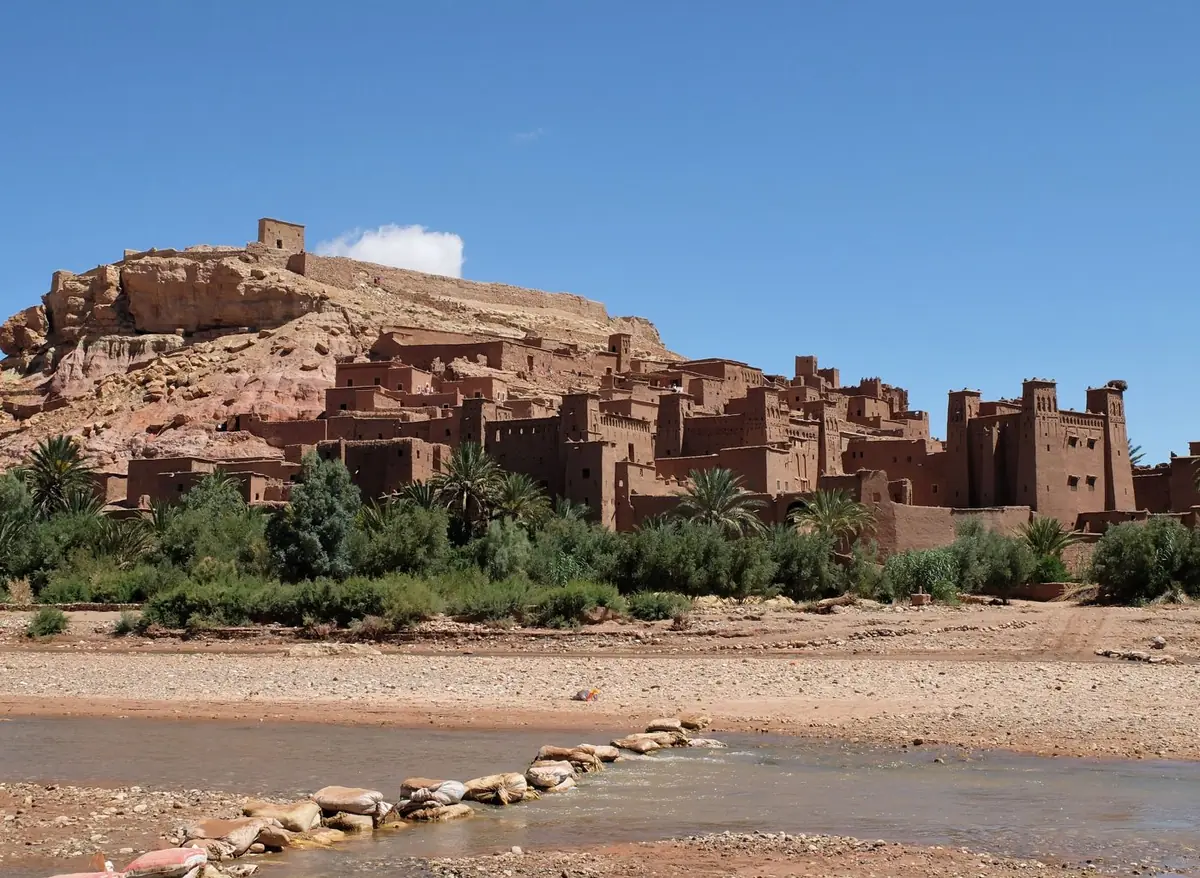
A kasbah in this regional context commonly refers to a fortified residence; a ksar is a grouped, fortified settlement. Taourirt’s monumental complex and neighbouring residential quarter reveal both scales. Aït Ben Haddou is a ksar, not simply one palace. Notice towers, compact lanes, communal spaces and decorative patterns, but remember that similar silhouettes do not prove that two buildings have the same age or purpose.
Living skills, fragile materials
Earthen walls and timber details need maintenance, skilled repair and protection from damaging interventions. Getty’s Taourirt work treats conservation as a technical and social task, not just a cosmetic restoration. A visitor can help by respecting closed areas and avoiding climbing fragile surfaces. Ask whether a building is historic, restored, inhabited or a studio reconstruction; appreciating the difference makes both heritage visits and cinema visits more rewarding.
Sources & further reading
Traditions, music and celebration
Meet cultural expressions as living practices, not fixed performances.
Ahwach: voice, rhythm and community
Ahwach brings together collective singing and dance in southern Morocco, especially across the High and Anti-Atlas. The Ministry of Culture describes participation by men and women and festive clothing that varies between communities. Music, rhythm and movement are therefore best understood through the performers’ own explanations. An advertised show, a public festival and a family occasion are different settings; a visitor’s invitation to one does not imply access to another.
Stories, dress and occasions
Local stories, songs and family celebrations carry knowledge that is not always written down. Their meanings can differ by household, generation and place. Ask for the context of a song, garment or decorative object rather than assigning a single meaning to it. Check current event announcements instead of assuming an annual festival has fixed dates. Credit performers, agree recording permission and make room for contemporary creativity alongside inherited forms.
Sources & further reading
Daily life, hospitality and etiquette
Respectful encounters begin with time, permission and clear expectations.
Tea and conversation
Tea is a familiar expression of Moroccan hospitality, but every invitation has its own setting. Allow time for greetings and ask politely about household customs. You can decline food or drink kindly, explain dietary needs and accept that a host’s practice may differ from a guidebook. Hospitality is a relationship between people, not a service that strangers owe visitors. A little patience and genuine listening matter more than collecting a staged “authentic” moment.
Homes, photographs and privacy
Ask before photographing someone, entering a courtyard or recording a celebration, and accept a refusal without pressure. Dress and behaviour should respond to the place: a public square, a family home and a religious site have different expectations. Clarify any guide fee, workshop charge or purchase before agreeing. For children’s photographs, seek the responsible adult’s permission and prioritise privacy rather than treating consent as an invitation to publish everywhere.
Sources & further reading
Food, flavours and local tables
Discover Moroccan cooking without pretending every dish belongs only to Ouarzazate.
Meals and seasonal ingredients
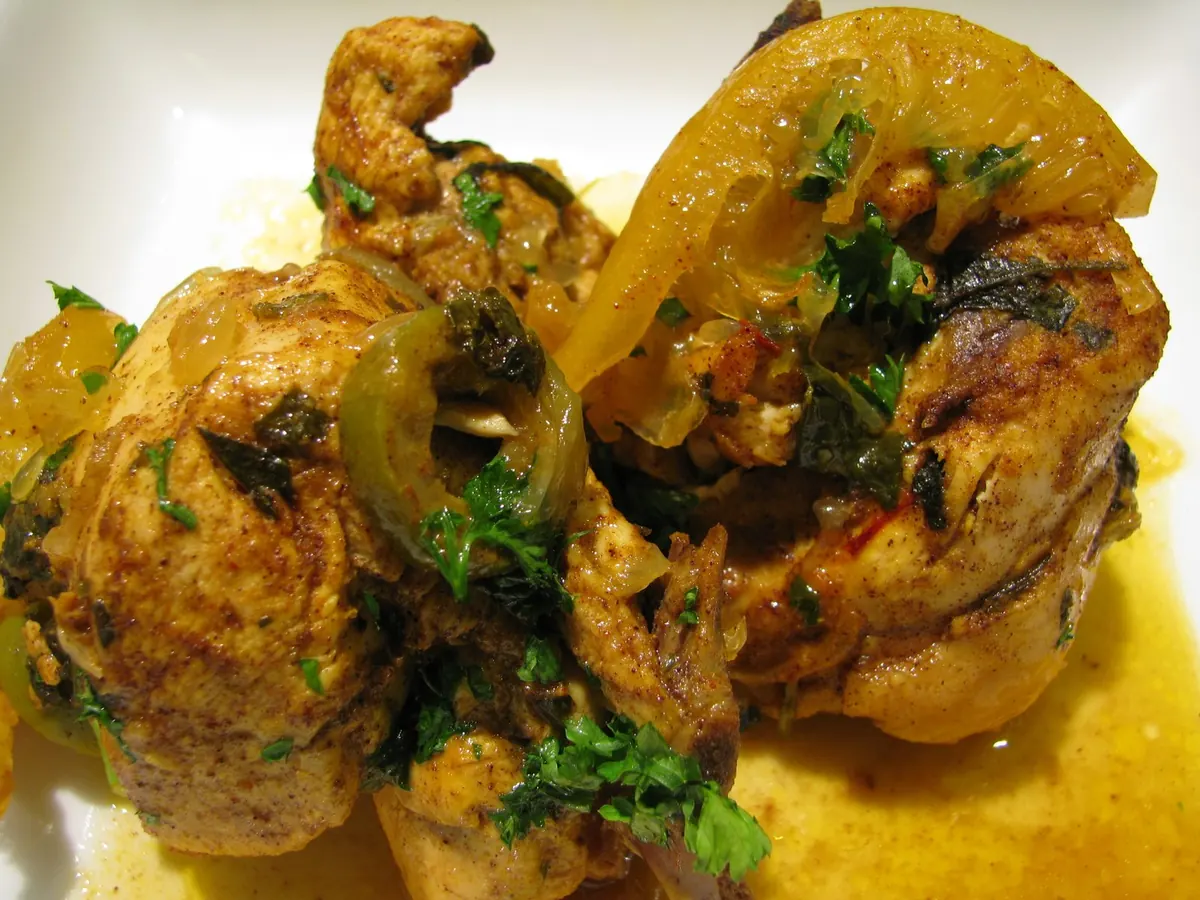
Tagine, couscous, bread, salads and tea are useful starting points for exploring local tables, but recipes vary widely between homes and kitchens. Morocco’s cuisine draws on several cultural traditions; these dishes are not exclusive inventions of Ouarzazate. Ask what is cooked that day and where ingredients come from. A simple meal explained by its maker can offer a better introduction than a menu that labels everything “traditional”.
Eat with clear expectations
Couscous is associated with Friday meals in Moroccan culinary tradition, while harira and sweets feature prominently during Ramadan. Availability still depends on the kitchen and occasion. Tell a host about allergies and ask explicitly about ingredients and preparation; a vegetarian-looking dish may use meat stock. On a booked excursion, distinguish a lunch stop from an included meal and agree drinks, dietary options and the final price before travelling.
Sources & further reading
Crafts, artisans and cooperatives
Follow the product back to the maker, and name its actual place of origin.
A regional collection, not one town’s output
The wider south offers distinct craft specialities: carpets around Taznakht, rose-water production near Kelaat M’Gouna, and pottery around Tamegroute and Zagora. These places are not all within Ouarzazate city or its province. A good product listing names the maker, material, place and technique rather than using “local” loosely. Ask who made an object, how it was produced and whether repairs or care instructions are available.
Direct encounters with makers
Ouarzazate also has its own working cooperatives. Beija’s public information describes weaving, basketry, jewellery and sewing in Isfoutalil; it is an example of a documented local initiative, not an automatic endorsement or a declared commercial partner of this website. Arrange visits with the organisation itself, agree workshop fees and photography, and request a clear receipt. Direct purchasing works best when the producer’s identity and the sale terms are transparent.
Sources & further reading
Cinema: landscapes and skilled work
Explore the film image and the people who help create it.
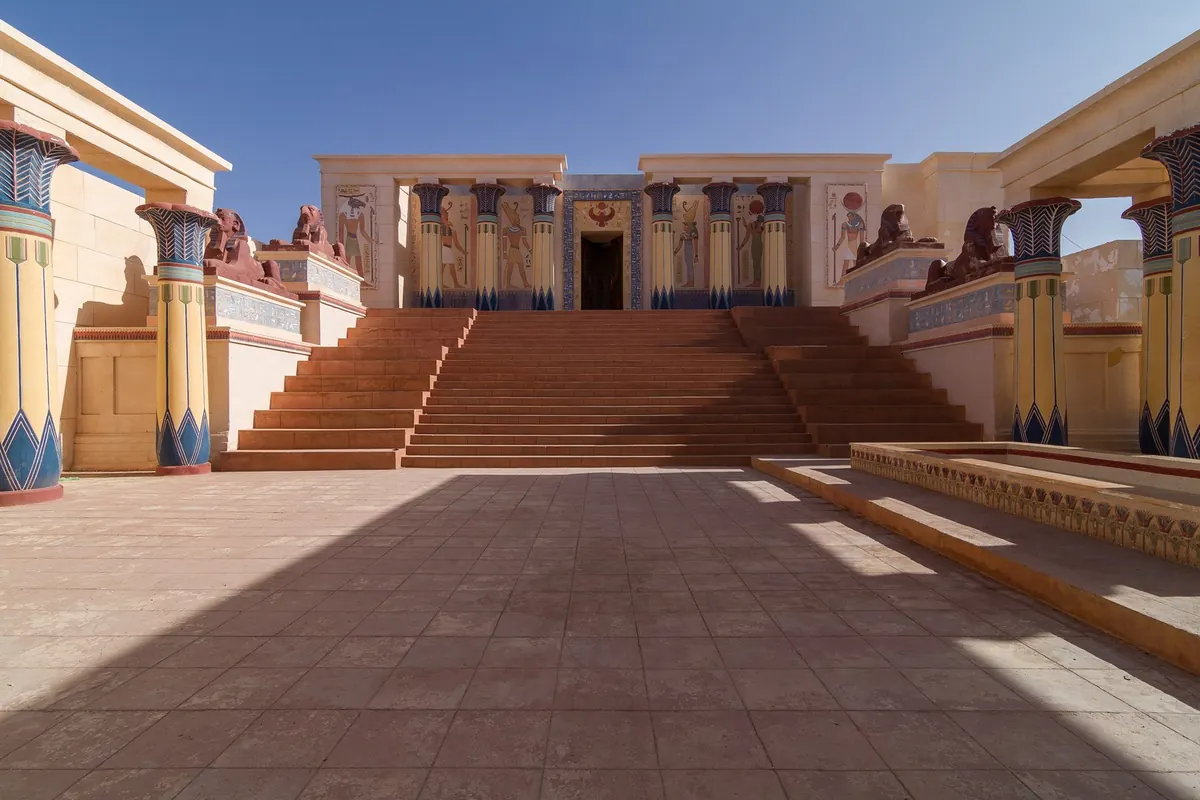
From location to production base
Ouarzazate’s cinema identity combines surrounding landscapes with production facilities. Atlas Studios states that it was established in 1983 and describes sets, workshops, offices and accommodation for crews. Film production is consequently more than famous titles: it also involves construction, costume, transport and technical work. A studio visit can introduce this practical world, provided it distinguishes an accessible visitor route from an active production area.
Read the screen and the real place
The Moroccan National Tourist Office associates the area with international productions including Gladiator and Babel. However, a film’s story location is not necessarily the place where it was shot, and not every set remains accessible. Ask which scenes or productions a guide can substantiate, and confirm the current route with the studio. Respect filming restrictions; a closed set is a workplace, even when its buildings look like a tourist attraction.
Sources & further reading
Noor and contemporary Ouarzazate
The city’s story includes education, services, entrepreneurship and energy.
Understand the solar project
Noor Ouarzazate adds an energy chapter to the region’s identity. Morocco’s energy ministry records Noor I as a 160 MW concentrating solar power project commissioned in 2016, led by Masen. That figure describes Noor I, not the whole complex. The facility is an operating industrial site rather than a freely accessible park. Request current visit authorisation through the responsible organisation; a distant viewpoint is not permission to enter.
A city that continues to change
Contemporary Ouarzazate should be seen through its residents’ ambitions, not only through old buildings or desert imagery. HCP’s regional presentation includes a higher-education institution in the city, alongside the wider region’s services and economic activity. In your visit, leave room for ordinary streets, cafés and conversations about present-day work. Support local enterprise on transparent terms and avoid assuming that every resident works in tourism or wants to perform tradition for visitors.
Sources & further reading
Visiting with respect and curiosity
Bring the city’s biography into your itinerary through thoughtful choices.
Build a balanced visit
Combine a heritage visit with time to understand contemporary life: an agreed neighbourhood walk, a local meal or a workshop can complement a monument. Choose fewer stops if that allows meaningful explanations and unhurried travel. Ask providers about walking surfaces, shade, toilets and access rather than relying on a generic “suitable for everyone” label. Confirm tickets and opening arrangements before departure; this editorial guide does not guarantee access to any site.
Keep value and care in the region
Responsible tourism connects environmental care with respect for communities and cultural heritage. Carry out waste, use water thoughtfully and avoid purchasing objects with doubtful provenance. Pay fairly for guiding and demonstrations instead of expecting unpaid labour for photographs. Choose documented producers and clear agreements, and separate a genuine cooperative visit from a sales claim you cannot verify. The best souvenir can be an informed encounter as well as a carefully made product.
Sources & further reading
Discover it with local people.
An introduction to the city and its region, reviewed in October 2026. Population, opening hours and access arrangements can change; consult the linked official sources for current details.