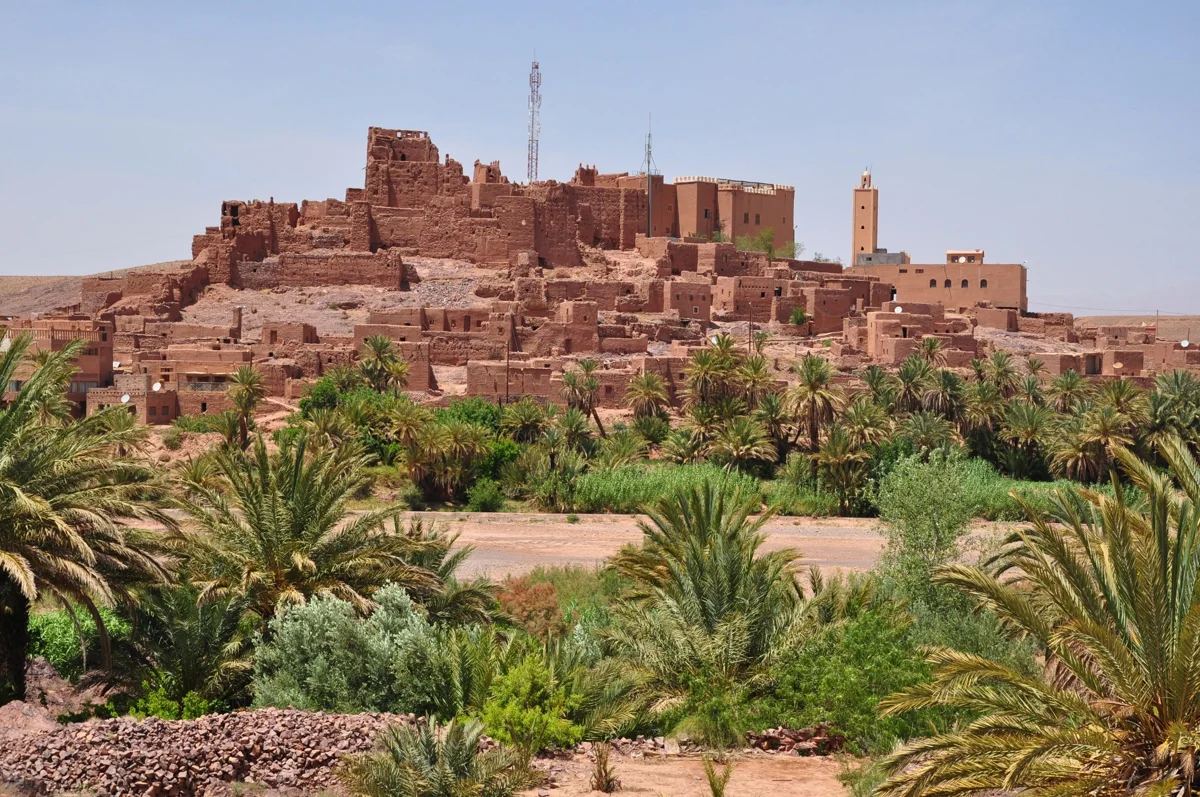
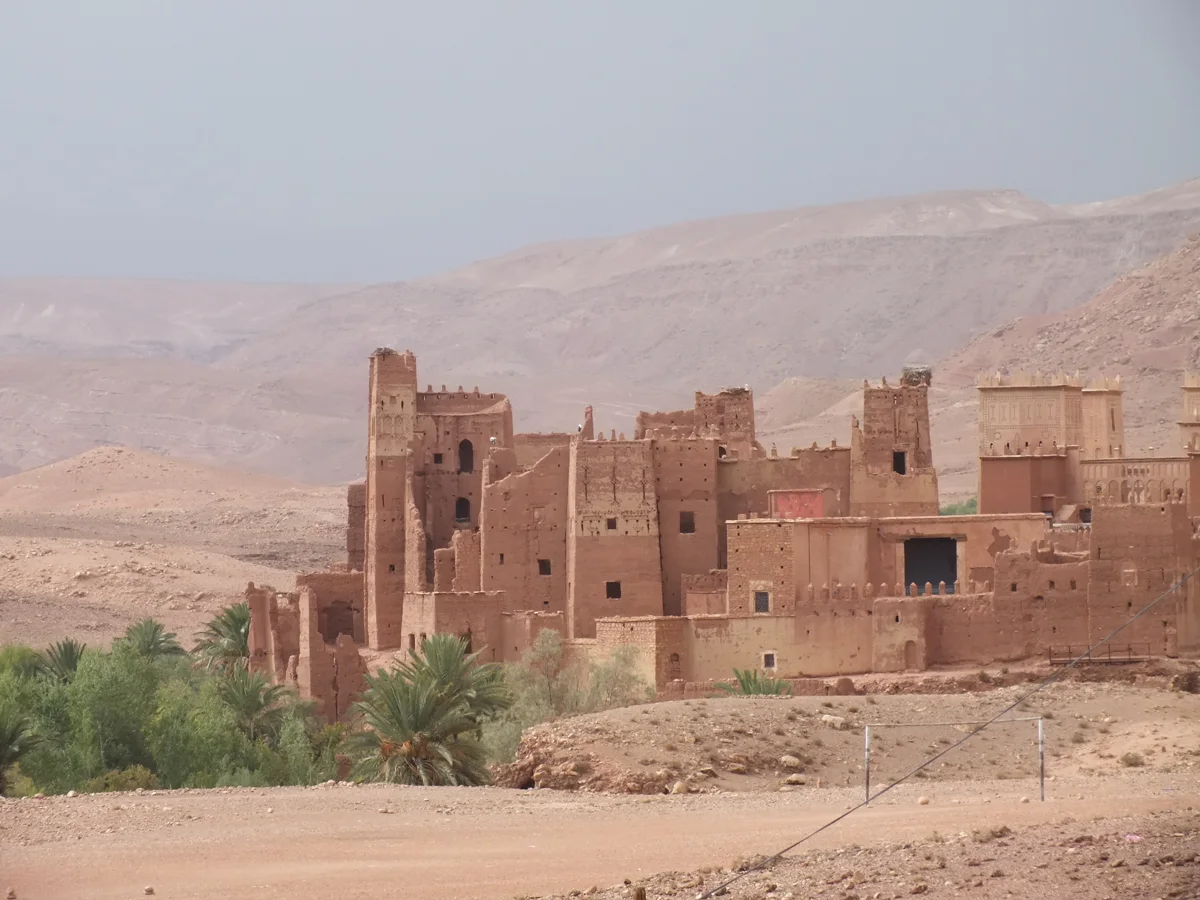
A better question than “which castle is this?”
A photograph can make the region’s buildings look interchangeable: ochre walls, angular towers and a mountain backdrop. A visit becomes more interesting when you ask how a place was used and how its rooms, lanes and entrances fit together. This guide offers a way to observe architecture around Ouarzazate, rather than another list of monuments to tick off. Choose one place, give yourself room to pause, and let its layout lead the conversation.
A settlement and a residence are different starting points
UNESCO describes Aït Benhaddou as a collective earthen settlement within defensive walls. That makes the ksar a useful place to think about a whole community. A kasbah can instead refer to a fortified residence or complex; local usage needs context. Ask your guide what the particular name means here, rather than assuming every tower belongs to a separate castle. Compare the Aït Benhaddou guide with Taourirt before choosing your outing.
Read the building at three scales
First stand back, from an authorised public viewpoint, and look at the relationship between buildings and surroundings. What can you see of roads, cultivated land or neighbouring houses? Then follow the permitted approach towards the entrance. Notice how a visitor moves from an open space into a narrower one. Finally look at details: the edge of a doorway, a surface pattern, the shape of an opening. These observations give you specific questions without requiring specialist vocabulary. Do not infer the age or purpose of a room from its appearance alone.
Ask about materials without turning the wall into a sample
Point to a detail and ask how it was made, repaired or maintained. Request an explanation of the materials used in this particular part of the building. Avoid scraping a surface, picking up fragments or testing a ledge. For conservation context, the Getty Conservation Institute’s Taourirt plan treats preservation as a combination of social, economic, cultural and technical questions. That is a useful reminder to ask who cares for a place today, as well as who once lived there.
Turn two visits into a comparison
Begin with Taourirt if you want to anchor the subject in Ouarzazate itself. On a separate outing, use Aït Benhaddou to compare a settlement with the complex you saw in the city. Keep a short notebook: entrance, shared space, room, decoration and surroundings. Write one question under each heading. This is an editorial suggestion for organising your attention, not a claim that every named space is open. If you prefer an oasis setting, consult Amridil and arrange the actual visit before travelling to Skoura.
Make the visit work for your group
Ask the host or guide about steps, uneven surfaces, resting points and the route currently offered. A request for “an accessible visit” is less useful than explaining whether someone can manage stairs, needs seating or is travelling with a pushchair. Agree a meeting point and return transport. Leave room for a meal and a pause instead of promising multiple interiors in one afternoon. Carry water and choose footwear that suits walking. A view from outside can still support a rewarding architectural discussion when an interior is unavailable.
Photograph a place with its people in mind
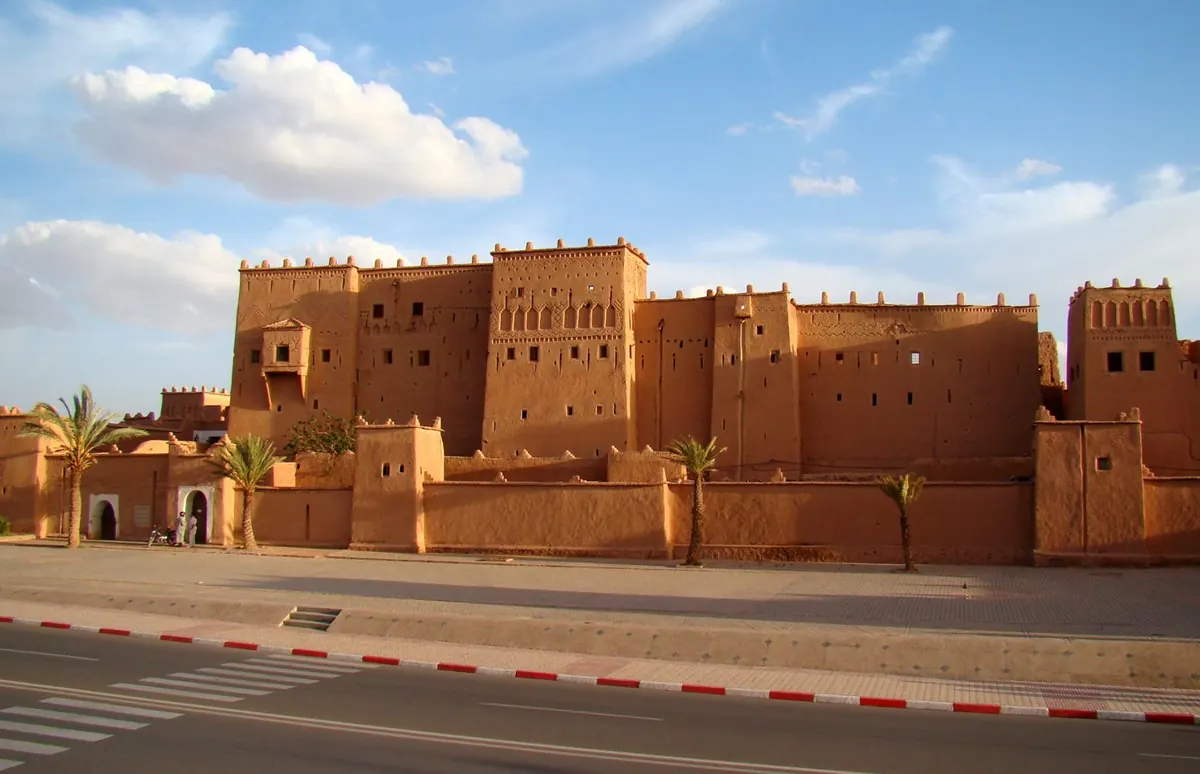
Take an overall view before concentrating on details; it will help you remember where a photograph belongs. Ask permission before photographing residents, workshops or private interiors. Keep doors clear and follow any restrictions on equipment. Historic buildings are not climbing frames, even when another visitor has stood on a wall. The cover photograph here shows Taourirt in 2011 and illustrates its exterior; it does not establish current access or condition.
Before you set out
Confirm the site, date, meeting point, guiding language and services included in the quote. Ask separately about admission and permission for any interior photographs. Bring your five observation questions and leave space for answers that surprise you. Use the trip planner to organise the journey, then confirm arrangements with the relevant host. Sources reviewed on 26 October 2026: UNESCO’s Aït Benhaddou entry and the Getty Taourirt conservation-plan record. Neither replaces a current access confirmation.
Photograph licence: CC BY-SA 3.0.
Updated: